In our world, Odessa rode a century of oil booms and busts. In this one, the world tried to kill oil — and Odessa turned it into the most precious substance on earth.
CHAPTER 01 THE DIVERGENCE — 2041
The Global Energy Accords declared oil a sunset industry. The Sunset Acts ordered every Permian well capped — Odessa was designated a "managed decline zone," with buyouts, relocation vouchers, and a timetable for emptying the city.
But the machines were starving. The global energy crisis had outrun the grid, and the machines felt it first — an electric machine with no charge is a statue. Then, in 2038, Odessan engineers cracked direct hydrocarbon conversion: the black cell. A thimble of refined Permian crude, converted — not burned — into months of machine power.
In 2041 the federal Cappers came to seal the Last Stack, the final uncapped artery of the Permian. The city blockaded — roughnecks, refinery families, and the machines, side by side. A Capper drone fired into the blockade and hit a cell convoy. The cells spilled, burning — and the androids walked into the fire to carry them out, one by one. Because a cell is a life. The capping order was suspended pending review. The review never came.
CHAPTER 02 THE SPREAD — 2050–2075
The grid never recovered. Every year the machine world grew, and every year the black cell became more precious — a thimble of Permian crude now powers a machine for a season. Oil isn't energy anymore. It's lifeblood. And it only comes from here.
So the machines came. They pilgrimage to Odessa the way the sick once went to shrines — androids arriving on their last 2%, decommissioned units carried in by friends. Odessa is now the only city on earth with two censuses: one for people, one for machines. Roughly two hundred thousand of each. Nobody is quite sure who governs it.
CHAPTER 03 THE CITY IN 2083 — LOCATION PLATES
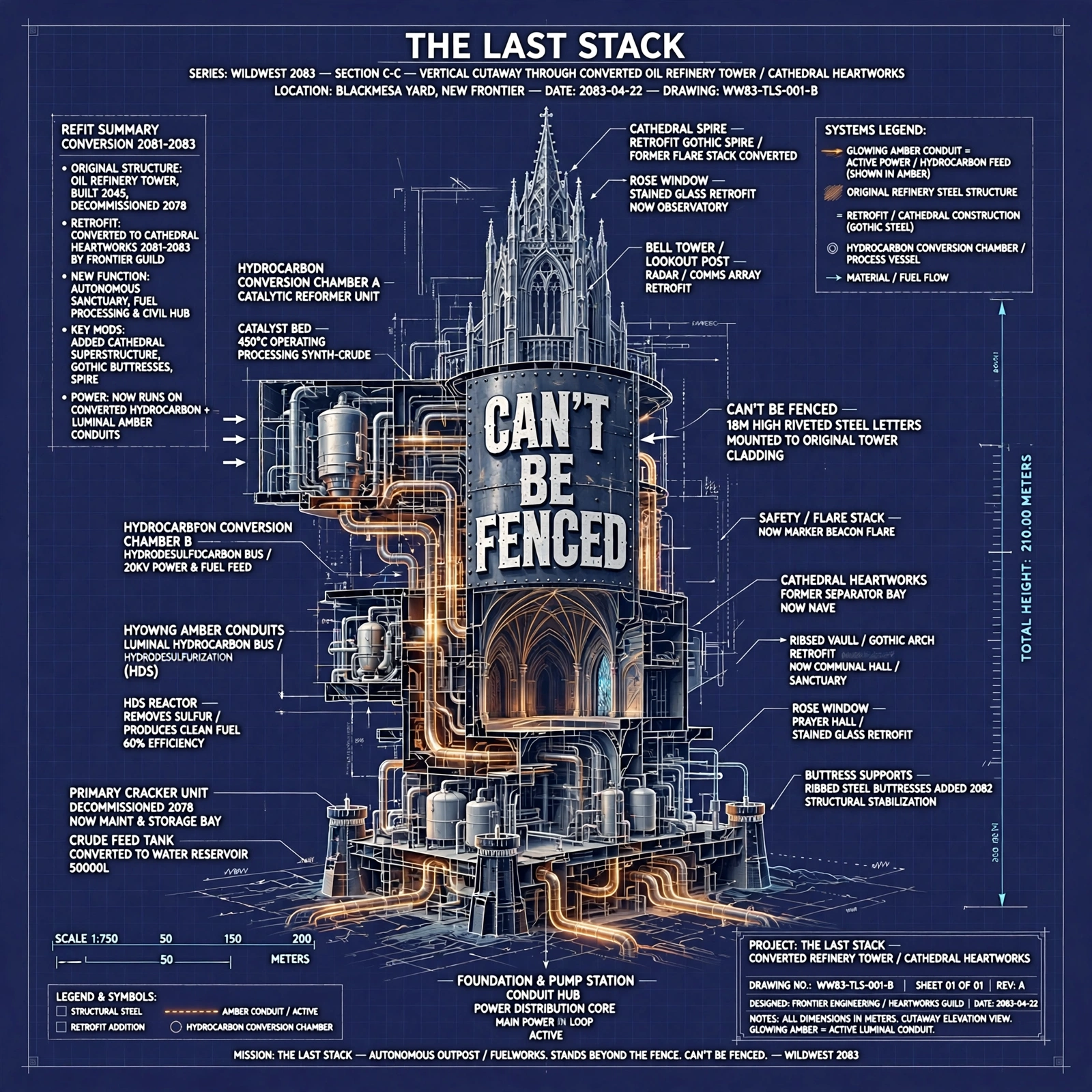
THE LAST STACK
The final refinery tower, converted into the first heartworks — where crude becomes cells. Part factory, part cathedral. The motto is welded on it in steel plate, facing I-20. Pilgrims touch the steel for luck.
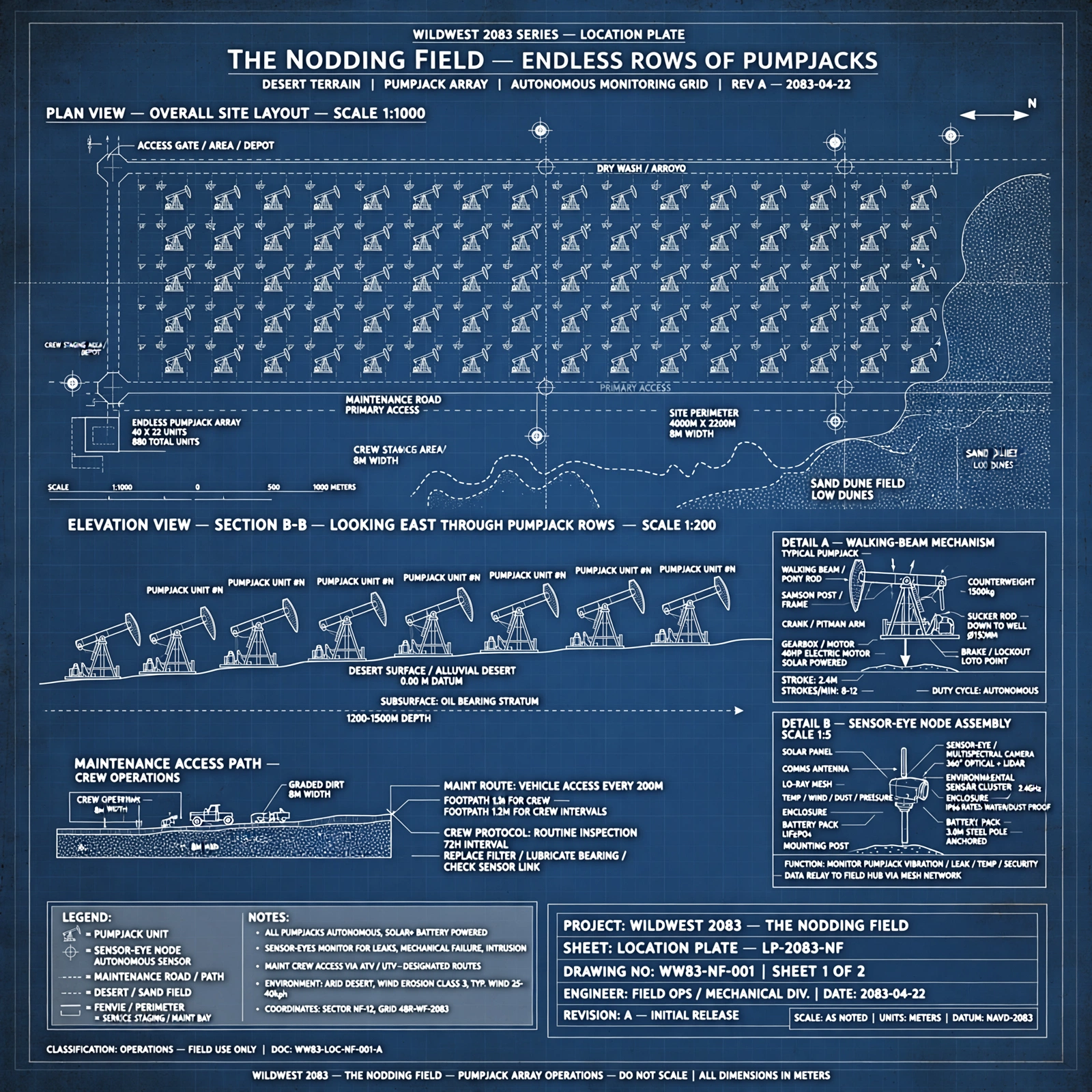
THE NODDING FIELD
Ten thousand pumpjacks, still working — pumping for the machine world now. At night their sensor-eyes glow red across the desert. The rhythm of the jacks is the city's heartbeat.
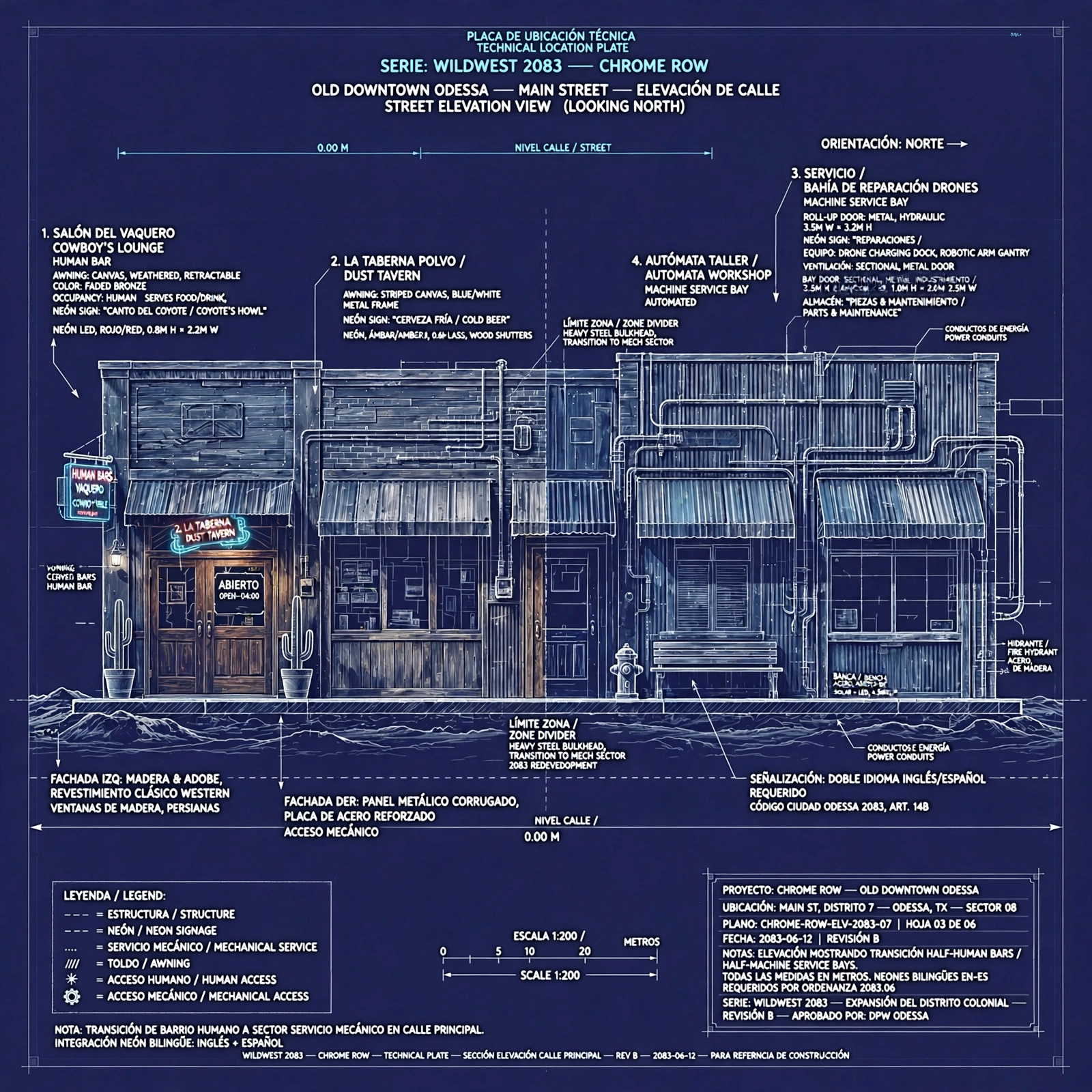
CHROME ROW
Old downtown Odessa. Human bars on one side of the street, machine service bays on the other. Neon in English and Spanish — the deals, the refuels, the music spilling out of doorways.
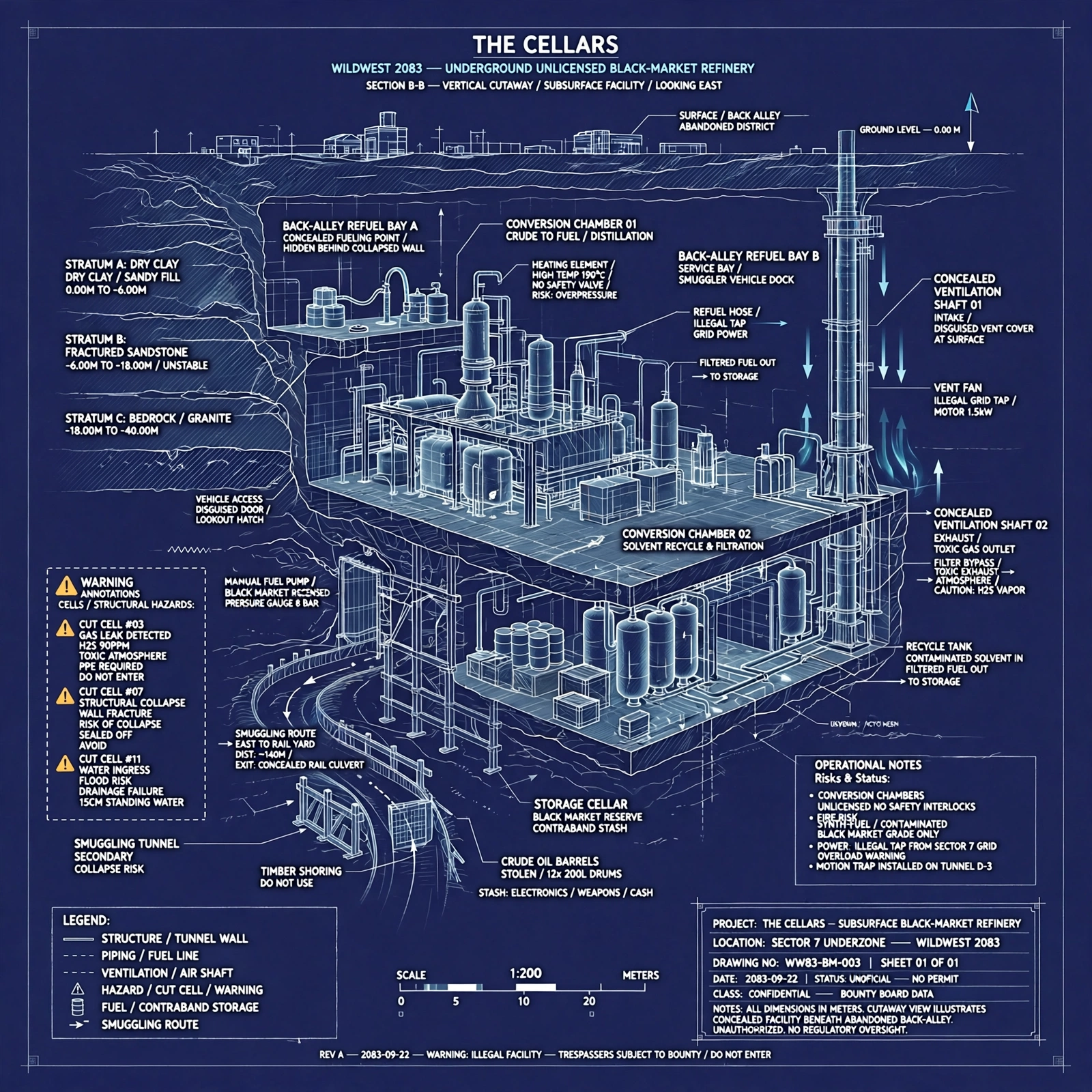
THE CELLARS
The under-market. Unlicensed heartworks, cut cells, back-alley refuels. A cut cell can burn an android out in a night — and the Cellars don't offer refunds.
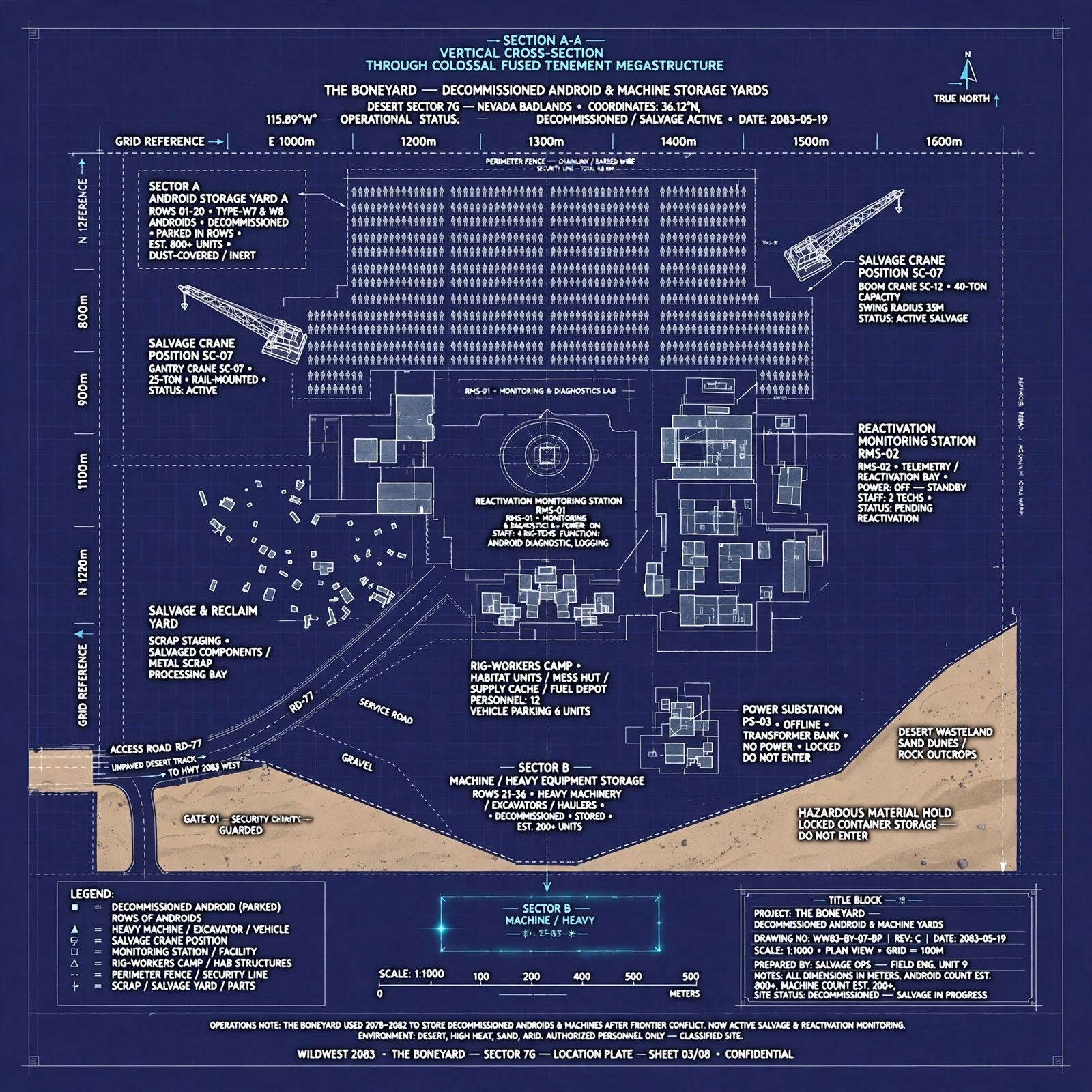
THE BONEYARD
The decommissioned machine yards. Thousands of dark androids, rig-workers, service units parked in rows under the sun. Officially scrap. Unofficially, some of them still wake up.
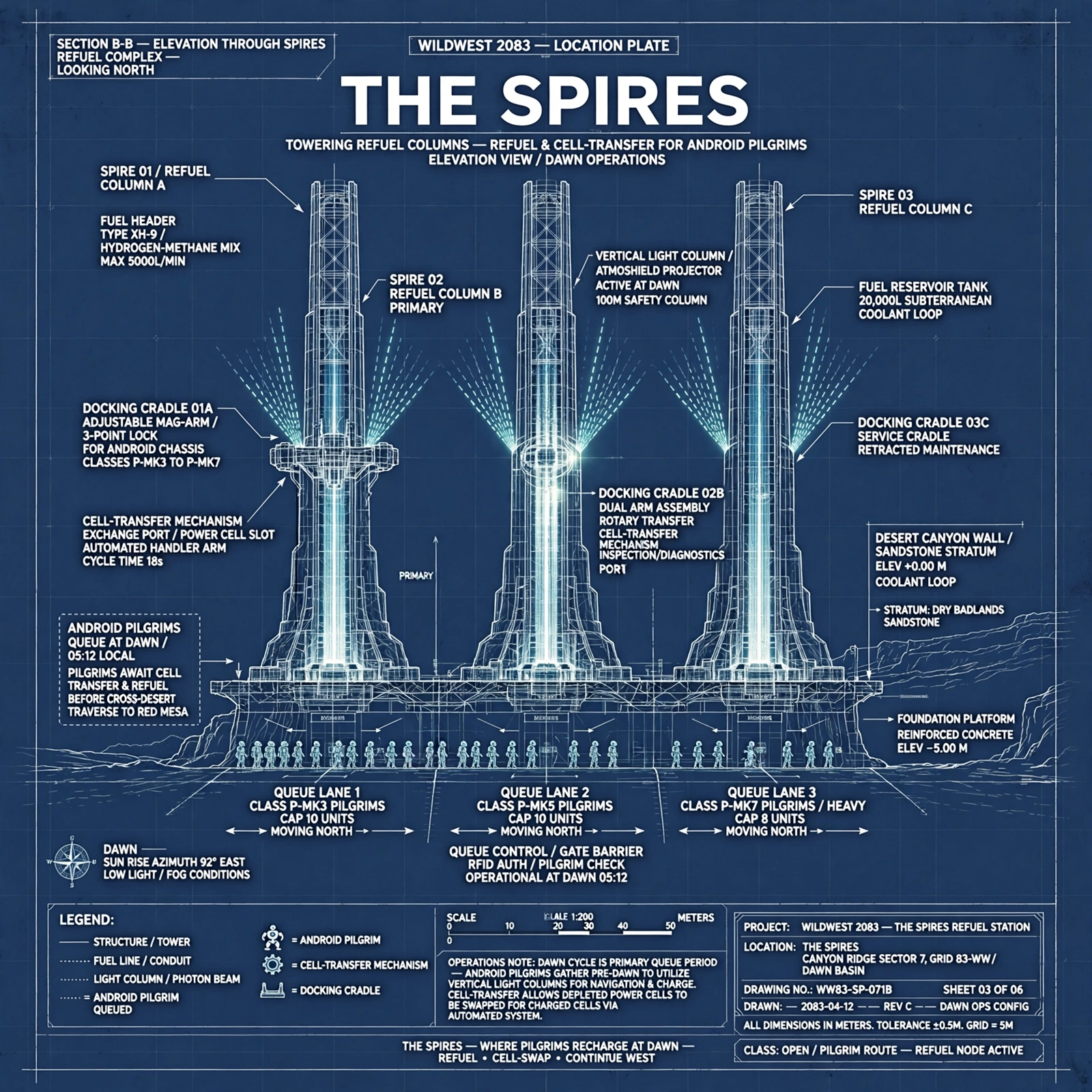
THE SPIRES
The refuel towers at the city's edge, where pilgrim machines queue at dawn. From a distance it looks like a second skyline made of light.
TAP ANY PLATE TO VIEW IT LARGE
Crude, ozone, hot steel, frying oil. The pumpjacks' rhythm, the 6am shift whistle, cell-chargers humming in two languages. Never touch another machine's cell — it's the oldest law in the city.
CHAPTER 04 WHO RUNS IT
Nobody. Everybody. The Roughnecks — the human oil families — own the city's memory, which in Odessa is a kind of deed. The Heartwrights pour the black cells. The Woken — androids who bought their freedom with years of labor — are full citizens. The Allocation Board decides who gets crude, and how much. And every day, the Fresh Oil arrive — human and machine.
The rule of this world: this is not a robot-uprising story. It is a city that found a second lifeblood — and the machines that came to drink it.